Blog
How to read a cat food label? Cat food in India
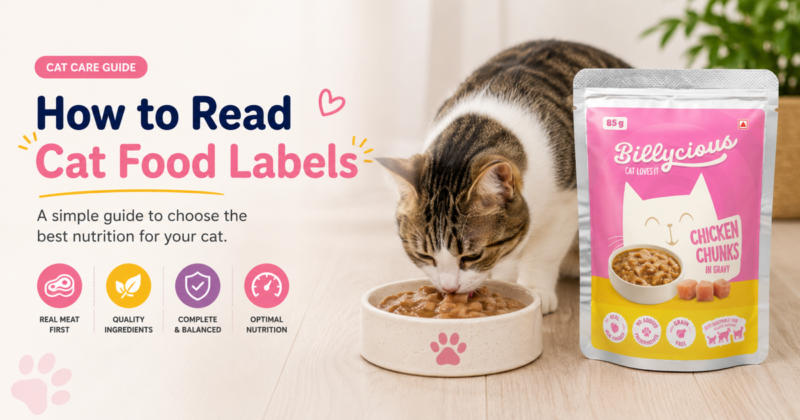
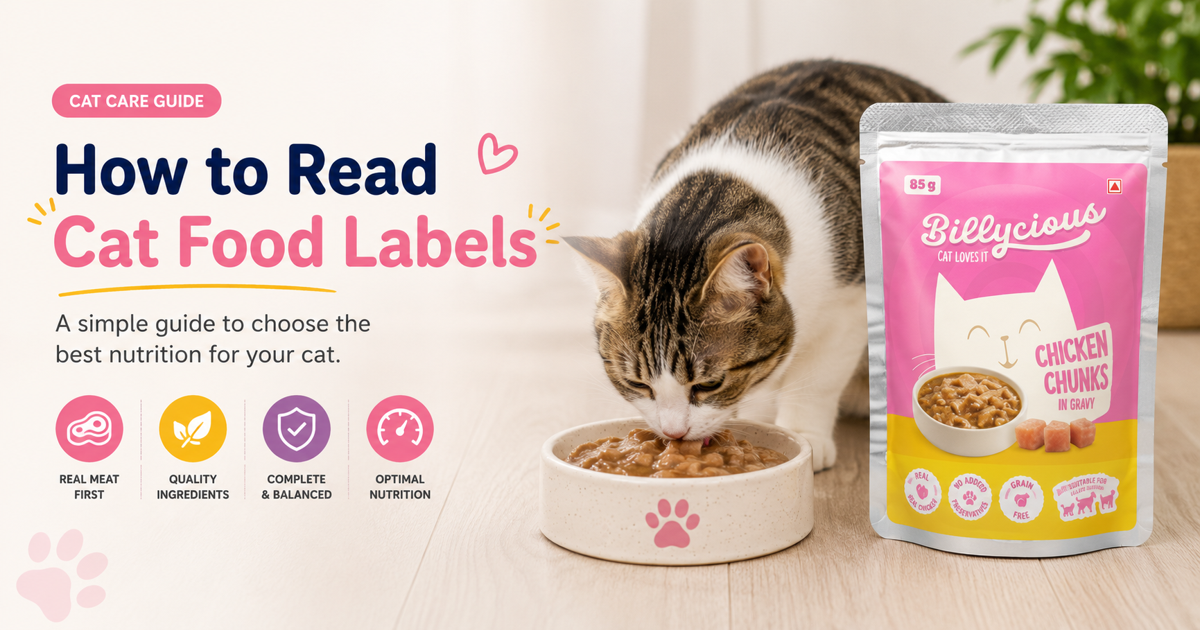
Choosing the right food for your cat can feel overwhelming. With hundreds of brands, marketing claims, and ingredient lists competing for your attention, understanding how to read a cat food label is one of the most important skills every cat parent can develop.
Whether you’re comparing wet cat food, dry cat food, kitten food, or senior cat diets, the label reveals everything you need to know about the quality, nutritional value, and safety of the product, thus becomes important to know – How to actually read a cat food label?
A well-balanced cat diet should provide high-quality animal protein, essential nutrients like taurine, appropriate moisture levels, and ingredients that support long-term health. Unfortunately, many pet food packages in India highlight attractive marketing terms while the real story lies in the ingredients list and guaranteed analysis panel.
1. First ingredient
The ingredient list is ordered by weight, the heaviest ingredient comes first. For a cat food to be nutritionally appropriate, the first ingredient should always be a named animal protein: chicken, fish, lamb, turkey. Not ‘meat by-products’, not ‘poultry derivatives’, not ‘cereals’.
Meat by-products are not inherently dangerous, they include organs like liver and kidney which are nutritionally valuable. But if the label says ‘meat by-products’ without specifying the animal or the organ, you do not know what you are getting. Named proteins like ‘chicken liver’, ‘salmon’, ‘tuna’ are more transparent and typically higher quality.
2. Taurine
Scroll through the ingredients list and find taurine. It should be there. Any complete commercial cat food legally required to meet nutritional standards must contain taurine. If you are buying an unusual or budget brand and taurine is not listed, do not buy it.
3. Moisture percentage
On the guaranteed analysis section of the label, find ‘moisture’. For wet food, this should be 70–80%. For dry food, 8–12%. This number tells you how much water is in the food and therefore what percentage of the food is actual nutrition versus water weight.
4. Ingredients to avoid
- Onion powder / garlic powder: Both destroy red blood cells in cats. Some cheap commercial foods contain these as flavour enhancers. Nnever buy food with these ingredients.
- Artificial preservatives (BHA, BHT, ethoxyquin): Linked to health concerns in long-term studies. Look for natural preservatives like mixed tocopherols (Vitamin E) instead.
- Excessive grain content: Corn, wheat, and soy as primary ingredients indicate a low-protein, high-carbohydrate food. Fine as a minor ingredient, problematic as a staple.
- Sugar or corn syrup: Added to improve palatability. Unnecessary and contributes to obesity and diabetes in cats
How much to feed your cat?
Overfeeding is one of the most common mistakes Indian cat parents make, partly because feeding feels like an act of love, and partly because cats are very good at convincing you they are still hungry.
- Adult cat (4-5kg): Approximately 200–250 calories per day. Two 85g pouches of wet food provides approximately 130–170 calories supplement with a small measured portion of dry food.
- Kitten (under 12 months): Kittens need more calories per kilogram than adults. Feed kitten-specific food or higher-protein food more frequently, 3–4 small meals per day rather than 2 large ones.
- Senior cat (7+ years): Metabolism slows with age. Reduce portions slightly and consider senior-formula food with adjusted protein and phosphorus levels for kidney health.
Always follow the feeding guidelines on the specific product you use as a starting point, then adjust based on your cat’s weight and body condition. A healthy cat should have a visible waist when viewed from above and ribs that are palpable but not prominently visible.
FAQ
The best cat food for Indian cats combines wet food for hydration with quality dry food. For everyday wet food, Billycious (India-made) and Whiskas are widely available and complete. For specific health needs, Royal Canin and Hill’s Science Diet are vet-recommended. The best food is one with a named protein as the first ingredient, taurine listed, and no onion or garlic.
Dry food alone is not recommended as the primary diet for Indian cats. Cats have a low thirst drive and do not compensate adequately for the lack of moisture in dry food. Chronic mild dehydration on a dry-only diet significantly increases the risk of urinary tract disease, which is one of the most common conditions in Indian indoor cats. Offer wet food at least once daily.
Plain boiled chicken or fish with no seasoning can be offered as an occasional supplement but should not replace commercial cat food. Home-cooked food lacks taurine, Vitamin A, arachidonic acid, and other nutrients cats need. Indian home cooking typically contains onion, garlic, spices, and salt, all harmful to cats. Never feed cats food seasoned with Indian spices.
Adult cats do best with two measured meals per day – morning and evening. Free-feeding dry food all day leads to overeating and obesity. Kittens under 6 months need 3–4 smaller meals per day. Wet food should be offered at meal times and not left out for more than 30 minutes, especially in Indian summer temperatures