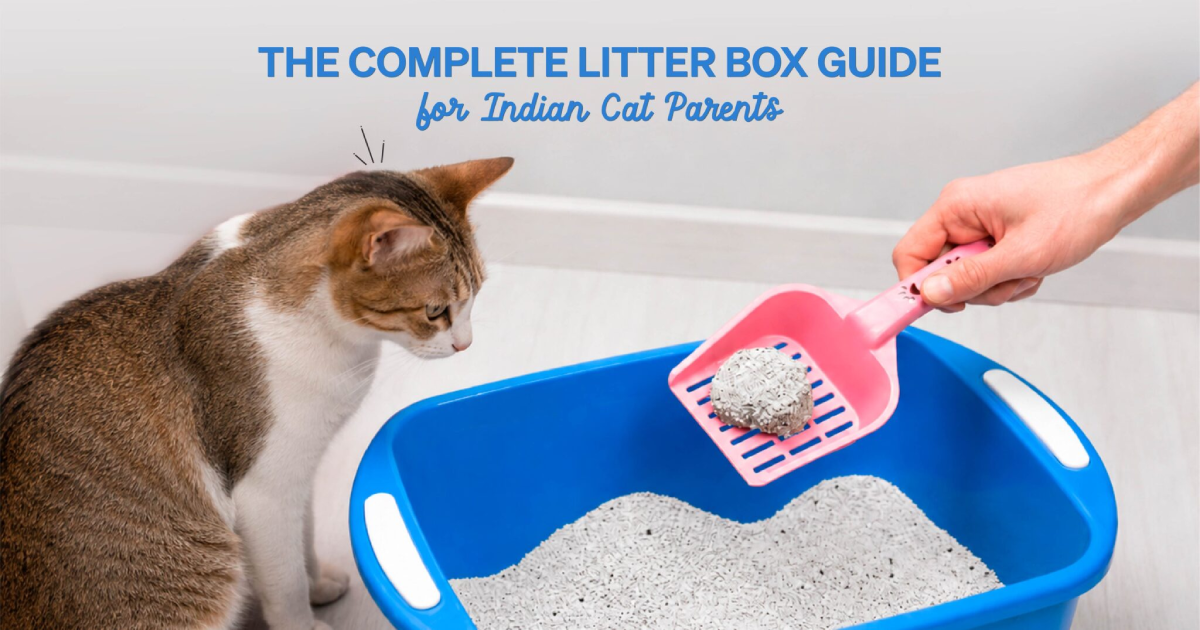
A litter box is where your cat will spend time every single day, So, getting it right affects their health, hygiene, and behaviour. If you just got your first cat , or are about to, the litter box is one of the most important things you will set up. Get it right and your cat will use it without complaint Because if you get it wrong and you will spend weeks wondering why your cat is doing their business on your bathroom mat instead.
This guide is written specifically for Indian homes – small apartments, warm and humid climates, and the products actually available here. No generic advice that assumes you have a backyard or can order from an American pet store.
Why the litter box is one of the most important things?
Cats are fastidiously clean animals. In the wild, they bury their waste instinctively to hide their scent from predators. That instinct does not disappear when a cat moves into your 2BHK in Ahmedabad or Bengaluru. They need a designated, clean space to do this and if they do not have one, they will find their own.
The health dimension is equally important. According to veterinary research, lower urinary tract disease (FLUTD) affects approximately 1–3% of cats seen in veterinary practice and changes in litter box behaviour are often the first visible symptom. A cat parent who monitors their cat’s litter box daily is doing one of the most effective forms of preventive healthcare available.
In short: the litter box is not just about hygiene. It is a health monitor, a behaviour indicator, and the first place problems show up.
How to choose the right litter box – size, type, and placement?
Most first-time cat parents pick whichever box looks decent at the store. The result is usually a box that is too small, placed in the wrong spot, or the wrong type for their home. Here is how to get it right.
- Open vs covered litter boxes?
This is one of the most common questions new cat parents ask. The honest answer: most cats prefer open litter boxes, even though covered ones feel cleaner to us. Covered boxes trap smell inside which is great for your nose but unpleasant for your cat, who has a sense of smell roughly 14 times stronger than yours. In Indian summers, a covered box in a warm flat can become genuinely hostile for a cat within hours of being used.
Recommendation: Start with an open box. If your cat is very shy or anxious, try a covered box with the flap removed first. Add the flap only once they are comfortable entering.
2. Where to place the litter box in a small Indian home?
- Away from their food and water. Cats will not eat near where they toilet, just like you would not
- In a quiet, low-traffic corner, avoid near the washing machine, near a busy doorway, or anywhere loud
- Accessible at all times and never behind a closed door
- In a ventilated spot as it is important in Indian summers; a closed bathroom with no airflow gets humid and smelly fast
- Not on the balcony if it can be avoided from the heat, direct sun, and rain make balcony litter boxes impractical
3. How many litter boxes does one cat actually need?
The rule: one litter box per cat, plus one extra. For a single cat in a 1 or 2BHK apartment, two litter boxes is the ideal setup. This gives your cat a choice, reduces the chance of accidents, and means one can be cleaned while the other is still usable. For a 3BHK or larger home with one cat, consider placing one box on each floor. Cats, especially older ones will not always walk to the other end of a large home to use the box.
Litter box tips for specific situations
1. 1BHK and studio flats. The challenge in a small flat is finding a spot that is quiet, ventilated, and away from the kitchen all at once. The bathroom is the most common solution, but make sure the door is never closed. A corner of the bedroom works well if ventilated. Avoid placing the box behind the sofa or in a cupboard because the cats need to feel they can exit the box quickly if startled.
2. Multiple cats, the N+1 rule in practice. If you have two cats, you need at minimum three litter boxes. Place them in different spots not side by side. Cats can be territorial about litter boxes, and a dominant cat can block a submissive one from using their box. Separate locations prevent this.
3. Kittens under 3 months and Young kittens need a litter box with very low sides. They cannot climb into a standard box. Use a shallow tray or cut down the front edge of the box. As they grow, graduate to a full-sized box.
4. Senior cats (7 years and older) with arthritis find it painful to step over a high-sided box. Switch to a low-entry box or cut an entrance in the front panel. Senior cats also urinate more frequently due to kidney changes so monitor closely and see a vet for annual kidney function checks.
The bottom line
The litter box is unglamorous, but it is one of the most important things you manage as a cat parent. Get the setup right, clean it every day without exception, and pay attention to what it tells you about your cat’s health. Most litter box problems are not behavioural, they are a cat communicating tool. Listening to that communication is one of the best things you can do for your cat’s long-term wellbeing.
If you are just starting out with your first cat, visit your nearest JustDogs store, our team can recommend the right litter box, litter type, and setup for your home specifically. And if you want to get your cat’s nutrition right alongside their litter hygiene, ask about Bellycious, India’s own cat food, made with Indian ingredients and priced for Indian families at ₹50 per pouch.